Measure contamination
Assess the particles present in a submitted fluid sample.

Laboratory services / San Diego
Particle count testing for hydraulic systems and lubricating fluids. Understand particulate contamination before it becomes a maintenance problem.
Confirm the method and reporting requirements with URS.
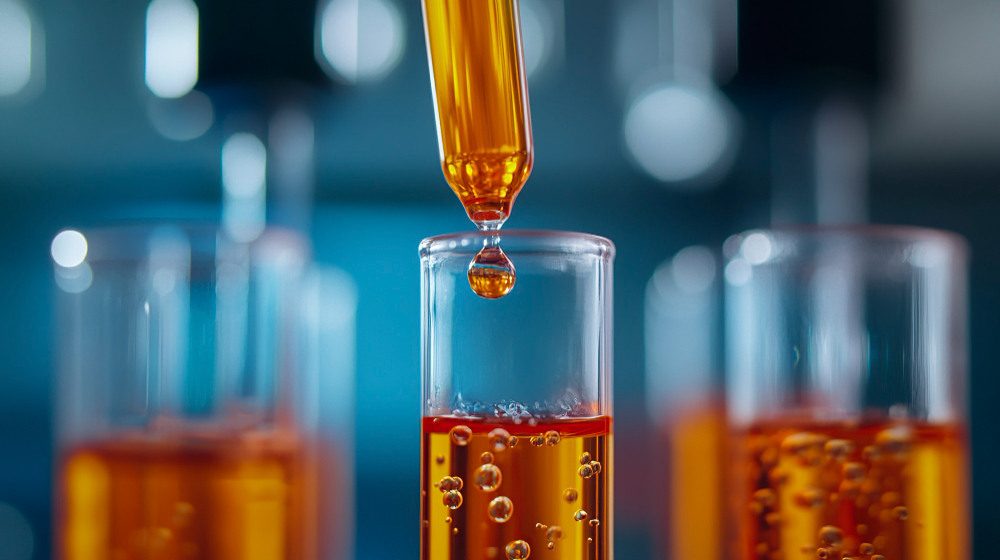
The question behind the sample
Particles in a fluid system can affect sensitive pumps, valves and other components. URS measures particulate contamination so your team can assess fluid cleanliness against the requirements relevant to your equipment.
Testing with purpose
Assess the particles present in a submitted fluid sample.
Review results alongside equipment requirements and maintenance history.
Compare consistent samples to identify changes in fluid cleanliness.
Your application
Before you send a sample
Tell us which cleanliness classification or equipment specification you need. URS can discuss ISO 4406 and NAS 1638 reporting requirements before you send a sample.
Discuss your requirements ↗From question to result
Share the fluid, equipment, reason for testing and any specification or deadline.
Agree the scope, container, sample volume, delivery instructions and turnaround with URS.
Use laboratory data alongside equipment guidance and your maintenance history.
Useful to know
A particle count describes particulate contamination. Understanding its source may require operating history, inspection or additional testing. Share what changed in the system when you enquire.
If water ingress or component wear is part of your concern, include that in your enquiry. The lab can discuss a scope that combines relevant tests.
Start with an enquiry describing the fluid, requested test and timing. URS confirms the scope, sample requirements and next steps before you send anything.
Let’s talk testing
Whether you know the exact test or need to discuss the scope, share the details with URS.
6197 Cornerstone Court E, Suite 102
San Diego, CA 92121
Ask about standard or urgent turnaround before arranging sample delivery.